DSE Economics tuition Make Economics your 5** strength

Understand concepts, analyse questions and answer precisely. Effective exam preparation goes beyond completing more papers. Chu Sir teaches S4–S6 himself, drawing on four consecutive 5** results to develop concepts, answer technique and exam strategy.

Chu Sir's Economics tuition at a glance

Find out in a minute who teaches, which courses are offered, where to study and how to enquire.

Courses and lesson arrangements

  • Classes S4–S5 regular classes and S6 topic-based or full-paper exam practice
  • Teaching language Chinese or English
  • Lesson format Wan Chai classroom at Room B2, 2/F, Tak Lee Commercial Centre, 117 Wan Chai Road, or online
  • Enquiries and registration WhatsApp 4404 1450. Education Bureau school registration no. 613797.
Economics course overview

Meet Economics tutor Chu Sir

Econ Chu sat DSE Economics himself for four consecutive years, from 2021 to 2024, earning 5** each time. His highest score was 98.8%*.

Chu Sir specialises in HKDSE Economics, focusing on concepts, structured answers and exam trends.

Our Economics courses include S4–S5 regular Economics classes and S6 Economics exam practice , with practice matched to attainment to help turn understanding into marks.

For teaching philosophy and lesson arrangements, see About Chu Sir . For past exam records and student accounts, visit Exam results 。

Four consecutive exam sittings

Chu Sir personally earned 5** in each DSE Economics sitting, with a best score of 98.8%*.

DSE Economics 5** achievement badge
2024
5**

2024 marked Chu Sir's fourth consecutive sitting and fourth 5**.

Select a year for details. These are Chu Sir's personal results.

These are Chu Sir's own results in four consecutive HKDSE Economics examinations. They are separate from the student cohort results.

Why sit the exam? First-hand experience reveals the pace, question demands and time pressure students face and informs classroom practice.

View Economics exam results

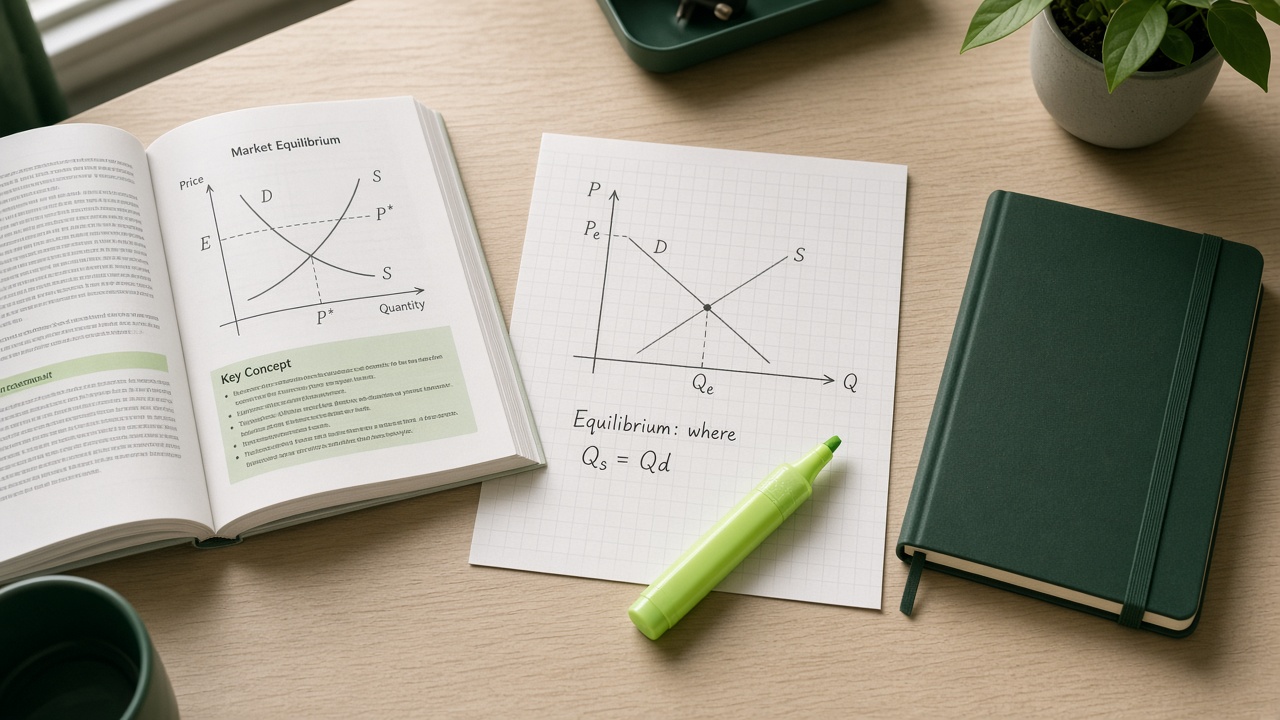
Supply and demand curves illustrate a framework for understanding economic concepts.

Economics beyond practice papers: understanding and analysis

Does the student revise and practise without seeing progress, or understand lessons but struggle to apply them?

Memorising definitions is only a start. Students need to understand a concept and apply it in different situations.

Chu Sir breaks down topics using conceptual frameworks, worked answers and practice feedback. Start with S4–S5 regular classes and prepare for the public exam through S6 exam practice classes to develop analysis and timing.

Economics study materials, diagrams and revision tools

Which abilities does Economics assess?

The HKEAA assessment objectives provide a guide to what candidates need to do in the exam. The seven objectives below follow the HKEAA 2025 Economics assessment framework.

How Chu Sir's classes address these objectives

Only the first objective focuses on knowledge alone. The other six require students to use it.

  • Understand the concept Clear frameworks develop understanding before memorisation, addressing objectives 1 and 4.
  • Analyse the situation Worked answers apply concepts to different contexts and data, addressing objectives 2, 3 and 5.
  • Answer precisely Feedback and paper reviews develop structured arguments, diagram use and clear expression, addressing objectives 6 and 7.
Explore Chu Sir's teaching philosophy

What is in the DSE Economics exam?

The HKEAA's 2025 assessment framework divides the public exam into Paper 1 and Paper 2. Together they account for 100% and assess analysis and other higher-order thinking skills.

Paper 1: multiple-choice questions (30%)

One hour covering the compulsory part. Answer all questions with attention to conceptual accuracy and speed.

Paper 2 Sections A and B (26% and 35%)

Section A has short questions. Section B has structured, essay and data-response questions. Both cover compulsory topics and require all questions to be answered. The full paper lasts 2 hours 30 minutes.

Paper 2 Section C: elective module (9%)

Structured or essay questions on the electives. Choose one of the two modules.

Assessment arrangements may change. Consult the latest HKEAA announcements.

Preparing for Paper 1

Paper 1 accounts for 30%, lasts an hour and covers the entire compulsory part, so gaps in any topic can matter.

Consolidate topics one at a time alongside school during S4 and S5. S4–S5 regular classes follows school progress in small groups with live Q&A.

Preparing for Paper 2

Paper 2 accounts for 70%. In two hours and thirty minutes, candidates complete short, data-response and extended questions.

S6 Economics exam practice includes timed exercises and reviews focusing on DRQs, essays and current affairs to build reasoning and pacing.

Economics syllabus

The compulsory syllabus includes ten microeconomic and macroeconomic topics, alongside a choice of elective modules.

Macroeconomics

Five compulsory topics covering economic performance, policy and international trade.

  • Measurement of Economic Performance Gross domestic product, price levels and unemployment
  • National Income Determination and Price Level Aggregate demand, aggregate supply and the determination of output and price levels
  • Money and Banking Money, banking, deposit creation and interest-rate determination
  • Macroeconomic Problems and Policies Inflation, deflation, unemployment, fiscal and monetary policy
  • International Trade and Finance Comparative advantage, trade barriers, the balance of payments and exchange rates

Choose one elective: Monopoly Pricing, Anti-competitive Behaviour and Competition Policy, or Extension of Trade Theory, Economic Growth and Development.

English-medium students can study the topics with Chu Sir using the terminology they use at school. Learning resources centre includes guides to demand elasticity and market intervention, with teaching videos.

Where students often lose marks

Students may work hard but direct their effort to the wrong difficulty. Four problems recur in Economics tuition.

Definitions learnt but difficult to apply

Recalling a definition is easier than applying it in a new context. Use a framework to connect each concept to unfamiliar questions.

Diagrams and explanations do not match

A graph needs a written explanation that matches it. Worked answers show how to link the two.

Missing steps in an answer

Understanding an argument internally is different from expressing each step. Homework feedback identifies the missing links.

Running out of time

Correct answers in untimed practice can be difficult to finish under pressure. S6 timed classes bring exam pacing into regular practice.

Economics courses

Chu Sir offers two courses, from regular school support to pre-exam practice, tailored to different years and levels.

S6 Economics practice: timed exercises and answer technique

S6 exam practice classes

Practise by level with a clear purpose. For motivated, disciplined students who want to aim higher.

  • Topic-based practice Around Levels 3–4: work through topics progressively, clarify concepts and strengthen weak areas.
  • Full-paper star-grade practice Around Level 4 or above: advanced full mock papers with data-response, essay and current-affairs questions.
  • Weekly homework and timed classwork Review answers together and practise allocating exam time.
Explore S6 Economics exam practice
Chinese-medium instruction English-medium instruction In-person lessons Online lessons

Both courses offer Chinese- or English-medium lessons in Wan Chai or online. See the Economics course overview for a comparison, or Contact us to enquire.

Economics course overview

Choose an Economics class by level

Use the student's year and most recent Economics result to choose among three routes.

Secondary 4 and 5

To consolidate schoolwork, ask questions and improve answer technique, choose S4–S5 regular classes 。

Secondary 6, around Levels 3–4

For gaps in particular topics, choose Topic-based practice to clarify concepts progressively and practise putting them into written answers.

Secondary 6, Level 4 or above

If your foundations are sound and you aim for Level 5 or above, choose Full-paper star-grade practice to develop analysis and answer technique through advanced mock papers.

Enrol in three steps

Include the following details so we can recommend a group.

Share year and result

WhatsApp 4404 1450 with the student's year and most recent Economics result.

Choose a group by attainment

S4–S5 students take regular classes. S6 students choose topic-based or full-paper practice according to level.

Choose language and format

Select Chinese or English, in Wan Chai or online, to suit your needs.

Why study Economics with Chu Sir?

Parents often want a tutor with strong subject knowledge who answers questions and adapts teaching to the student's needs.

First-hand experience

From 2021 to 2024 Chu Sir sat DSE Economics and scored 5** every year. He brings practical knowledge of timing and question requirements into class. About Chu Sir 。

Star-grade results

His highest score was 98.8%*. Nearly 60% of students in past star-grade classes reached Level 5 or above. Visit results page for student accounts.

Classroom or online

Study in Chinese or English, in Wan Chai or online, to suit your timetable. Find directions on the contact page 。

Notes and videos

Notes and videos support revision and give students opportunities to practise using concepts in their answers. Visit Learning resources centre for details.

For parents

If revision and practice have not improved results, the student may need help with a concept, its application or the way an answer is expressed.

Share the student's year and most recent Economics result to help us identify a suitable class. See Course overview for options, and find our address and registration details under Contact us 。

For students

If you follow a lesson but struggle with questions, small-group Q&A gives you a chance to ask for help immediately.

Aiming higher in S6 takes commitment. Weekly homework, timed exercises and guided reviews develop analysis and exam technique. Student stories to hear how other students experienced the classes.

Economics learning resources

Alongside tuition, revisit topics with teaching videos, Economics notes and free materials organised by subject.

Following DSE Economics through exam experience

Four consecutive years in the exam hall help Chu Sir follow changes in question formats, timing and answer requirements and apply them to teaching.

For exam records and student results, visit Exam results for details.

About Chu Sir

Wan Chai Economics tuition and online classes

Classroom lessons take place in Room B2, 2/F, Tak Lee Commercial Centre, 117 Wan Chai Road. Study online or in person, in Chinese or English.

Education Bureau school registration no. 613797.

Contact us

Economics tuition FAQs

Common questions about classes, the DSE Economics exam and lesson arrangements.

When should I start Economics tuition?

S4 and S5 students can join regular classes to follow school progress and consolidate concepts before difficulties build up. S6 students can join exam practice class for topic-based or full-paper practice according to attainment.

Which Economics classes does Chu Sir offer?

S4–S5 regular classes and S6 exam practice. S6 students choose between topic-based training and full-paper star-grade practice. Topic-based practice typically suits Levels 3–4, and full papers suit Level 4 or above. Course overview 。

Which papers are in the DSE Economics exam?

Under the 2025 HKEAA framework, Paper 1 is a one-hour multiple-choice paper worth 30%. Paper 2 lasts two hours and thirty minutes and accounts for 70%. Paper 2 Sections A, B and C account for 26%, 35% and 9% respectively.

Which topics are in the DSE Economics syllabus?

The ten compulsory topics cover basic concepts, firms and production, markets and prices, market structure, efficiency and equity, economic performance, national income, money and banking, macroeconomic policy and international trade and finance. Candidates also choose one of two elective modules in Paper 2 Section C.

Can tuition help when Economics results have stalled?

Learn to interpret and apply each concept in different situations. Worked answers and feedback help identify where marks are lost.

Can I study Economics in English?

Yes. Both Chinese- and English-medium classes are available to suit your school. For details, visit

Where are the classes? Is there an online option?

Attend in Room B2, 2/F, Tak Lee Commercial Centre, 117 Wan Chai Road, or online. For directions, visit Contact us 。

How should S6 students choose between topic-based and full-paper practice?

Topic-based practice consolidates weaker concepts around Levels 3–4. Full-paper practice generally suits Level 4 and above and develops higher-level analysis and timing. S6 exam practice classes 。

Do students simply work through more papers?

No. Groups follow attainment, with weekly homework, timed classwork and guided answer reviews.

What results have Chu Sir and his students achieved?

Chu Sir earned 5** from 2021 to 2024 and a personal best of 98.8%. Nearly 60% of students in past star-grade classes earned Level 5 or above. Exam results for details.

Is the school registered with the Education Bureau?

Yes. School registration no. 613797, Room B2, 2/F, Tak Lee Commercial Centre, 117 Wan Chai Road.

How can I enquire or enrol?

WhatsApp 4404 1450 with the student's year, most recent Economics result and preferred language and format.

Ready to work towards 5** in DSE Economics?

For a course recommendation, message us with the student's year and latest Economics result. WhatsApp 4404 1450.

WhatsApp enquiries